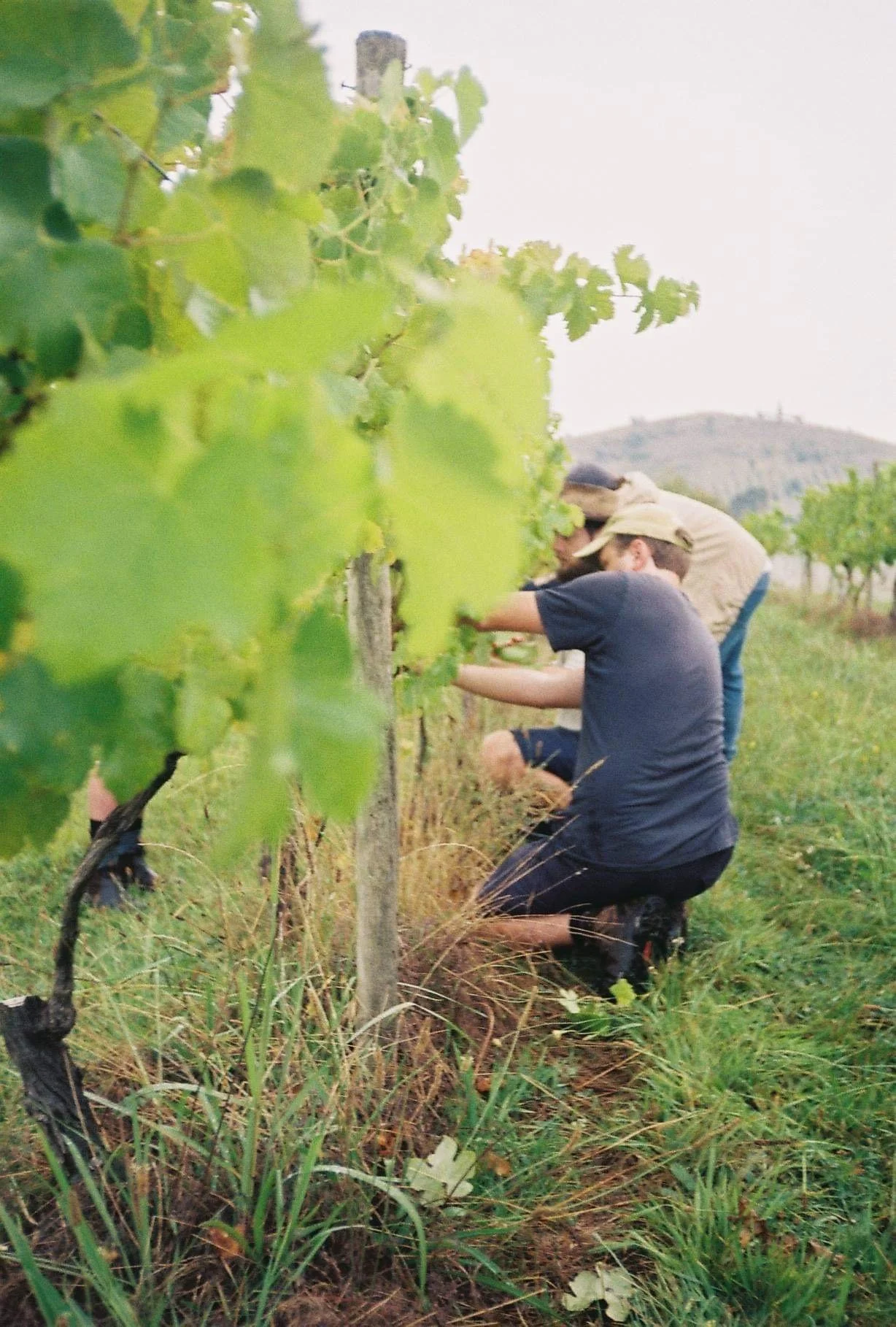
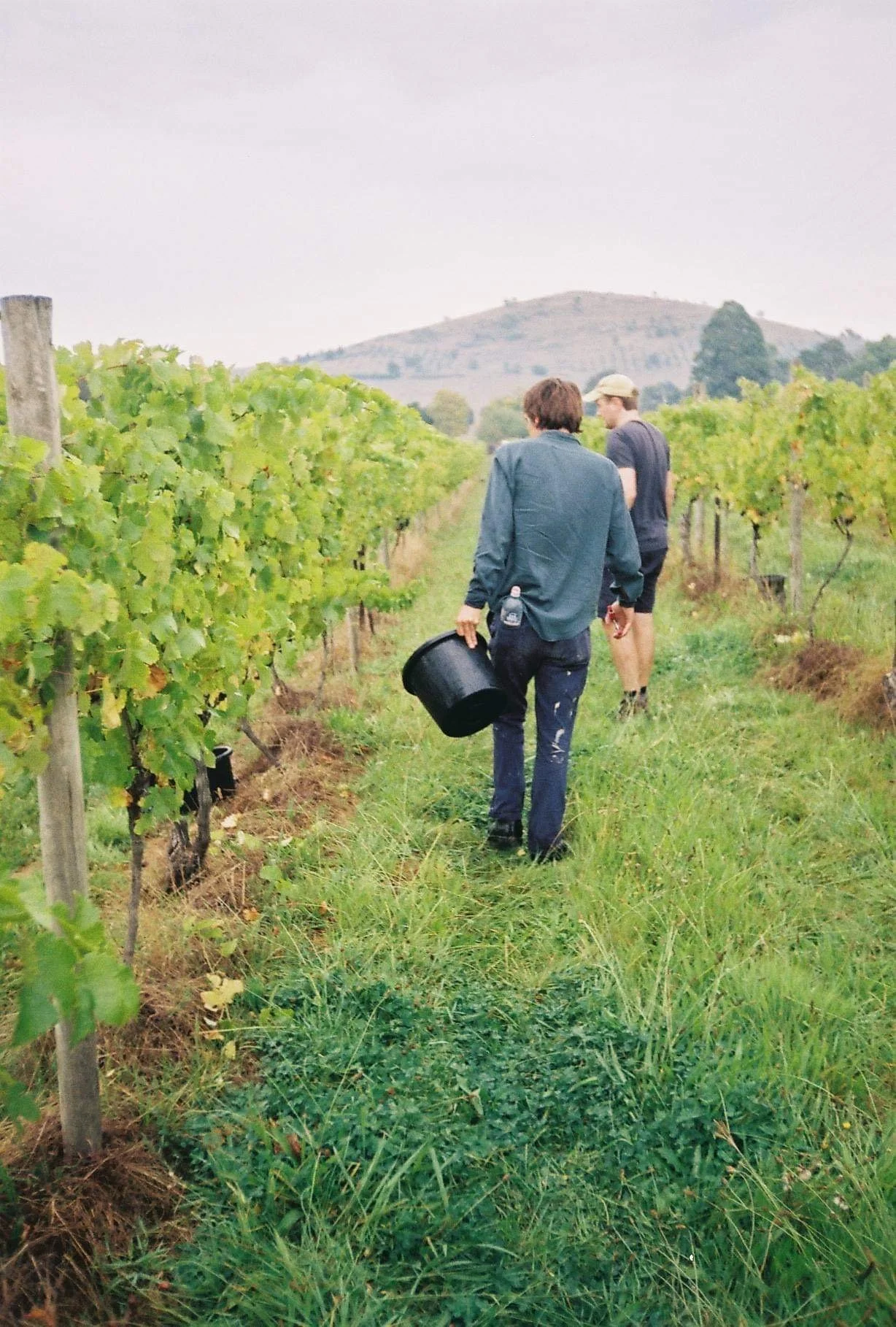
the vineyards
dixon’s creek - yarra valley
the fruit for the 2021 syrah came from the old fergusson’s vineyard in dixon’s creek. the vineyard is located on the valley floor and usually is one of the warmer locations in the yarra valley. the vines were planted in 1968 making them some of the oldest remaining vines in the area. we had the unpassable opportunity to get access to the rare old vine fruit. the season was much wetter and cooler than the long term average, >800mm rainfall, resulting in fruit physiological ripeness occurring with higher acidity and lower sugar than typical. soil type is grey silty loam. vine age ensured super low yields resulting in great concentration. unknown clone of shiraz
tibooburra - yarra valley
the fruit for the 2022 syrah came form the esteemed tibooburra vineyard located in yellingbo the vineyard is located in the upper yarra valley and is consistently a cooler sub region than the rest of the yarra valley. the fruit was lovingly grown by greg kerr. the specific block we get the fruit from is quite different from other syrah sites. it is south-westerly facing and on black volcanic soils unlike the rest of the vineyard. due to the orientation and location of the block, during vintage the fruit can often get a cooling maritime breeze from the western port, which helps to keep acid, fruit freshness and the fruit on the vine longer to ensure greater flavour development. 2022 was another wet and cool year >1000mm, which resulted in similar conditions to the 2021 season. in 2021 tibooburra vineyard was listed in the top 50 vineyards in australia by young gun of wine(https://younggunofwine.com/vineyard/solitude-estate-yarra-valley/)
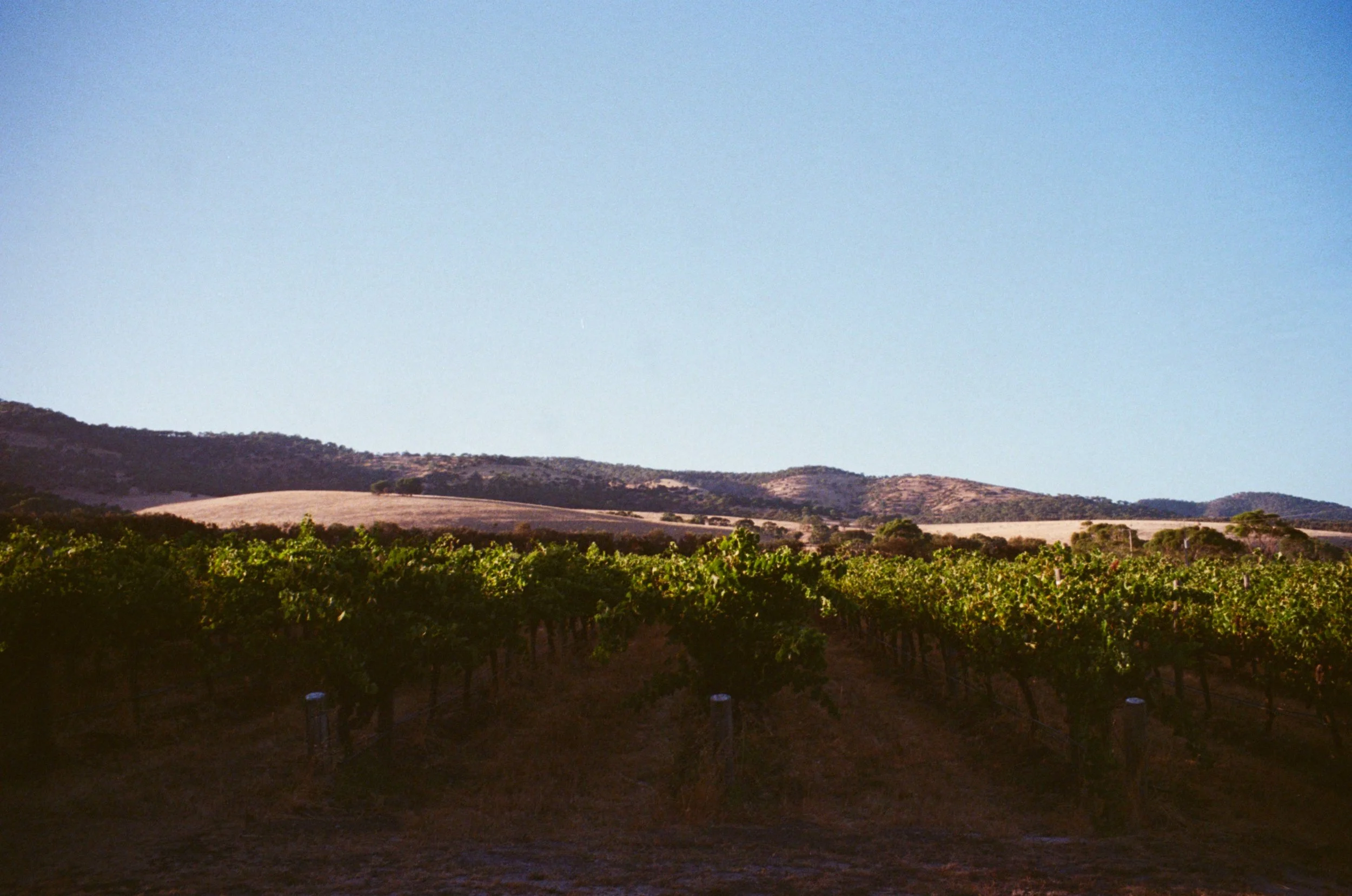
sellicks hills - mclaren vale
our grenache comes from ‘pat’s mum’s block’ up in sellicks hill, on the southern edge of mcLaren vale, up in the foothills of the mount lofty ranges, with plenty of sea breeze. the vines are about 30 years old, spur pruned, and well settled into the site. rainfall is around 580 –700 mm a year, mostly in winter, which keeps disease low and means the vines don’t need too much attention. at 300–350 metres, it’s a bit cooler and windier than the valley floor, with shallow red loam soils over limestone that keep the vines working hard and yields modest. (the grenache comes out rich and full of flavour, but with good freshness, structure and a subtle mineral edge from the site.)
the backbone of ambling